Content Menu
● Germany's Regulatory and Market Background
● Main Materials Used by German Compostable Cutlery Suppliers
>> Wooden and Bamboo Cutlery
>> CPLA and Other Bioplastics
>> Edible and Novel Materials
● Leading Germany‑Focused Compostable Cutlery Players
>> Green Box (BiologischVerpacken) – Sustainable Packaging Expert
>> Duni Germany – Design‑Driven Sustainable Concepts
>> Franz Mensch – Foodservice Disposable Specialist
>> Innovative Edible Cutlery Companies
● Role of Global OEM Compostable Forks Manufacturers And Suppliers
>> Why German Companies Buy from Overseas OEM Factories
>> Typical Cooperation Models
● How to Select Compostable Forks Manufacturers And Suppliers for the German Market
>> Check Certifications and Compliance
>> Assess Product Portfolio and Material Flexibility
>> Evaluate OEM and Branding Capabilities
>> Consider Logistics, Lead Times, and Stock Strategies
● Opportunities for International OEM Factories Targeting Germany
● Conclusion
● FAQ
>> 1. Why is Germany an attractive market for compostable fork sourcing?
>> 2. Which materials are most common among Compostable Forks Manufacturers And Suppliers in Germany?
>> 3. Can overseas OEM factories cooperate with German companies on private‑label compostable forks?
>> 4. What certifications should I look for when choosing Compostable Forks Manufacturers And Suppliers for the German market?
>> 5. How can brands balance cost and sustainability when buying from Compostable Forks Manufacturers And Suppliers?
Germany is becoming one of Europe's most strategic hubs for sustainable foodservice packaging, and compostable cutlery is at the center of this transformation. For international buyers looking for reliable Compostable Forks Manufacturers And Suppliers, the German market offers a combination of local eco brands, agile distributors, and strong links to global OEM factories that can support long‑term private‑label projects.
As bans on single‑use plastics expand across the European Union, German restaurants, catering companies, and retailers are rapidly replacing traditional plastics with compostable forks, knives, and spoons made from wood, bamboo, CPLA, and other plant‑based materials. This shift creates clear opportunities for overseas OEM producers and for buyers who want a stable, compliant, and competitive sourcing base in central Europe.
Germany's Regulatory and Market Background
Germany operates under strict EU regulations on single‑use plastics, which push foodservice operators to adopt compostable or reusable alternatives. These rules do not only affect large national chains; small cafés, bakeries, street‑food stalls, and delivery brands also need eco‑friendly cutlery options to stay compliant. As a result, demand for dependable Compostable Forks Manufacturers And Suppliers has grown in all regions of the country.
Another important factor is consumer awareness. German customers are highly sensitive to sustainability claims, packaging materials, and waste management practices. When brands choose compostable forks and other eco cutlery, they are not just following regulations; they are also responding to customer expectations about environmental responsibility. This makes quality, transparency, and certifications especially important when selecting Compostable Forks Manufacturers And Suppliers that serve the German market.
From a logistics perspective, Germany sits in the middle of the EU and acts as a distribution hub for surrounding countries. Many buyers use German warehouses and partners to serve neighboring markets such as Austria, Switzerland, the Netherlands, Belgium, and the Nordics. That is why so many global Compostable Forks Manufacturers And Suppliers see Germany as a gateway for their European expansion and invest in local cooperation or stock.
Main Materials Used by German Compostable Cutlery Suppliers
Wooden and Bamboo Cutlery
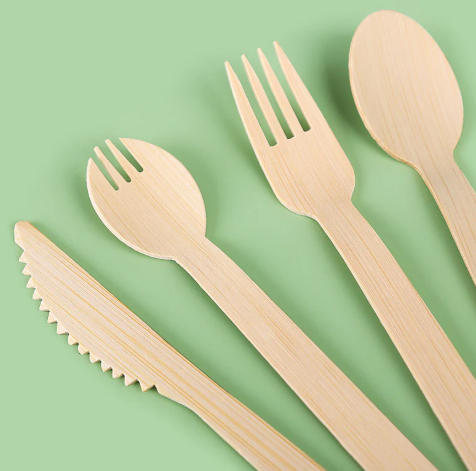
Wooden and bamboo forks are currently the most visible alternative to plastic in Germany's takeaway and catering scenes. Wooden forks, knives, and spoons fit well into the country's natural aesthetic and communicate a clear eco message to consumers. Bamboo, on the other hand, offers a slightly more premium look and fast‑growing raw material advantages.
Compostable Forks Manufacturers And Suppliers that focus on wooden and bamboo cutlery usually emphasize:
- Use of FSC‑certified or sustainably managed forests for raw materials.
- Smooth finishing and splinter‑free surfaces, which are critical for user comfort and safety.
- Ready‑made fork and cutlery sets for food trucks, festivals, airlines, and delivery platforms.
Many German distributors source these wooden forks from established Asian and Eastern European factories, then re‑brand and re‑pack them for local customers. In this model, the German company becomes a key point of contact for buyers while the overseas Compostable Forks Manufacturers And Suppliers provide the production capacity and technical expertise.
CPLA and Other Bioplastics
CPLA (crystallized polylactic acid) is widely used in the German market for compostable cutlery that needs higher heat resistance and more rigidity than standard PLA. For hot meals, delivery services, and institutional catering, CPLA forks and full cutlery sets are often the preferred solution.
Global Compostable Forks Manufacturers And Suppliers that produce CPLA cutlery generally highlight:
- Industrial compostability under standards such as EN13432 or similar regulations.
- Heat resistance typically up to around 80–90°C, making forks suitable for soups, hot dishes, and coffee shop food.
- Color options beyond classic white, including black, natural tones, and custom corporate colors.
In Germany, many CPLA forks in the market come from specialized overseas OEM factories. German companies import these forks in bulk, ensure documentation is complete, and then sell them onward under local brands. For buyers, this means they can work with a German partner who understands local requirements while still benefiting from the scale and cost structure of international Compostable Forks Manufacturers And Suppliers.
Edible and Novel Materials
A smaller but fast‑growing niche in Germany involves edible and unconventional cutlery materials. Companies producing edible spoons and stirrers from plant‑based ingredients offer a strong marketing message and a unique customer experience. For example, edible cutlery for ice‑cream shops, dessert cafés, or coffee bars can reduce waste and create social‑media‑friendly products.
These innovative solutions do not yet dominate the market like wooden or CPLA forks, but they are important for brands that want to differentiate themselves. Forward‑looking Compostable Forks Manufacturers And Suppliers may combine traditional materials with these experimental options to build a layered product strategy: basic wooden forks for large volumes, CPLA forks for hot meals, and edible items for special campaigns.
Leading Germany‑Focused Compostable Cutlery Players
Green Box (BiologischVerpacken) – Sustainable Packaging Expert
Green Box, also known as BiologischVerpacken, is a German specialist in sustainable packaging solutions and eco‑friendly disposable products. It offers a comprehensive portfolio that includes napkins, dishes, cups, food containers, and wooden cutlery sets.
In the context of Compostable Forks Manufacturers And Suppliers, Green Box plays a central role as:
- A focused brand for biodegradable and compostable forks and knives in Germany.
- A reliable distributor for restaurants, catering companies, food trucks, and event organizers.
- A partner that can support customized printing and branded packaging for importers and private‑label customers.
Green Box's range of wooden forks and matching cutlery sets is suitable for both small independent outlets and large foodservice groups. For international buyers, cooperating with such a German packaging specialist can make it easier to access the market without immediately building their own local sales network.
Duni Germany – Design‑Driven Sustainable Concepts
Duni is a well‑known label in the European hospitality industry, and its German operation provides a broad assortment of tableware, napkins, and eco‑friendly disposable cutlery. Duni's design focus makes its solutions particularly attractive to hotels, corporate catering, event venues, and restaurant chains.
Within the ecosystem of Compostable Forks Manufacturers And Suppliers, Duni Germany brings:
- High‑quality wooden and bamboo forks integrated into complete table concepts.
- Collections that match cutlery with napkins, table covers, cups, and food containers to build a coherent visual identity.
- Strong distribution in Germany and surrounding countries, making it a natural choice for regional roll‑outs.
For overseas OEM producers, Duni Germany is a potential long‑term partner that can transform imported compostable forks into strong branded concepts for the local market. For buyers, using Duni products can simplify sourcing because many coordinated items are available from a single vendor.
Franz Mensch – Foodservice Disposable Specialist
Franz Mensch is a German supplier that concentrates on foodservice disposables, hygiene items, and protective equipment. Its wooden cutlery assortment includes forks, knives, spoons, stirrers, and specialties such as tasting forks or Asian‑style utensils.
In terms of Compostable Forks Manufacturers And Suppliers, Franz Mensch can be seen as:
- A one‑stop shop for wooden forks and related wooden tableware items for catering companies and restaurants.
- A practical partner for buyers who want to combine eco‑cutlery with other disposable products such as gloves, hygiene papers, and cleaning supplies.
- A bridge between professional foodservice requirements and sustainable materials, with attention to quality and safe handling.
Importers or brands that source from global Compostable Forks Manufacturers And Suppliers can often integrate Franz Mensch products into their offerings or use the company as a benchmark for quality expectations in the German market.
Innovative Edible Cutlery Companies
Germany also hosts or attracts several innovative brands working on edible cutlery and alternative materials. These companies are particularly interesting when buyers want to build eye‑catching campaigns or premium eco concepts instead of purely functional forks.
Edible spoons and stirrers made from cereal or plant fibers can be offered to:
- Ice‑cream shops that want customers to eat the spoon along with the dessert.
- Coffee shops and drink bars that want to replace plastic stirrers with edible solutions.
- Event and festival organizers looking for memorable sustainability experiences.
For Compostable Forks Manufacturers And Suppliers, these niche products can be used as a complementary line that differentiates a brand and supports storytelling around zero‑waste or circular economy strategies.
Role of Global OEM Compostable Forks Manufacturers And Suppliers
While Germany has strong local players, a large part of the country's compostable fork supply is still produced by overseas OEM manufacturers. These global Compostable Forks Manufacturers And Suppliers often focus on CPLA, PLA, and large‑scale wooden fork production, then cooperate with German partners for branding and distribution.
Why German Companies Buy from Overseas OEM Factories
There are several reasons why German distributors and brands choose to work with international Compostable Forks Manufacturers And Suppliers:
- Competitive production costs thanks to scale, automation, and access to raw materials.
- Ability to offer wide product portfolios, including forks, knives, spoons, stirrers, chopsticks, plates, bowls, and lids.
- Experience with global certification schemes and the ability to supply detailed documentation.
For overseas manufacturers, Germany is attractive because it offers a stable, high‑value market with strong demand for eco‑friendly cutlery. Working with German partners allows these factories to position themselves as reliable Compostable Forks Manufacturers And Suppliers for multiple EU markets at once.
Typical Cooperation Models
Common cooperation models between German companies and overseas Compostable Forks Manufacturers And Suppliers include:
- Bulk import of neutral compostable forks that are re‑packed in Germany under local brand names.
- Joint development of private‑label lines where the OEM factory produces custom‑molded forks and the German partner manages marketing and sales.
- Long‑term contracts in which the OEM factory maintains a baseline production capacity specifically dedicated to a German buyer.
In many cases, German companies focus on stock, service, and market feedback, while the overseas Compostable Forks Manufacturers And Suppliers invest in molds, production technology, and quality assurance.
How to Select Compostable Forks Manufacturers And Suppliers for the German Market
Check Certifications and Compliance
When choosing Compostable Forks Manufacturers And Suppliers that will supply Germany, compliance is the first priority. Buyers should request and verify:
- Compostability certificates, such as EN13432 or equivalent, especially for CPLA and other bioplastic forks.
- Food‑contact test reports that confirm cutlery is safe for use with cold and hot dishes.
- FSC or similar certificates for wooden forks and related wooden products.
A qualified supplier should be able to provide documentation quickly and respond clearly to questions about regulations. This is essential for brands that sell into major German retailers or participate in public tenders.
Assess Product Portfolio and Material Flexibility
The best Compostable Forks Manufacturers And Suppliers for Germany are usually those that can offer multiple materials and formats. Buyers often need:
- Standard dinner forks, dessert forks, and tasting forks to cover different applications.
- Wooden forks for rustic concepts and CPLA forks for high‑heat or delivery applications.
- Bundled sets that combine forks with knives, spoons, and napkins in a single pack.
By working with suppliers that have broad portfolios, buyers can simplify sourcing and optimize containers with mixed SKUs. This flexibility also makes it easier to respond to new trends, such as black forks for premium take‑away brands or special fork designs for salad or pasta.
Evaluate OEM and Branding Capabilities
For international wholesalers and private‑label brands, OEM and branding support is critical. Strong Compostable Forks Manufacturers And Suppliers should be able to:
- Print or label packaging with buyer logos, product descriptions, barcodes, and sustainability claims.
- Support multilingual packaging for Germany and neighboring EU countries.
- Provide templates and design guidance for boxes, sleeves, and retail pouches.
This allows the buyer to build a strong, distinctive brand while relying on the supplier's production capacity and technical know‑how.
Consider Logistics, Lead Times, and Stock Strategies
Germany's role as a distribution hub means that logistics planning is central to successful cooperation with Compostable Forks Manufacturers And Suppliers. Buyers should clarify:
- Typical production lead times for forks, including high‑season capacity.
- Available shipping options and transit times to German ports or rail hubs.
- Possibilities for buffer stock, consignment stock, or third‑party logistics to shorten delivery times.
A joint planning process improves reliability and helps avoid stock‑outs during peak demand, such as summer festival season or holiday periods.
Opportunities for International OEM Factories Targeting Germany
For foreign Compostable Forks Manufacturers And Suppliers, Germany offers long‑term business opportunities if they can meet high standards and develop strong relationships with local partners. Factories that specialize in compostable forks and cutlery can position themselves as:
- Strategic OEM bases for German brands that want full control over design and quality.
- Volume suppliers for German distributors that need stable large‑scale production.
- Innovation partners for new materials, unique fork shapes, and advanced packaging concepts.
By understanding German regulations, consumer expectations, and the role of logistics hubs, overseas Compostable Forks Manufacturers And Suppliers can design tailored offers that fit the market rather than relying on generic global products.
In many cases, combining the strengths of different partners yields the best outcomes. A German distributor may handle market access and customer service, while an overseas OEM factory ensures cost‑effective, high‑volume production of certified compostable forks. When this ecosystem works smoothly, brands and wholesalers can build competitive eco‑friendly product lines with reliable supply and strong environmental credentials.
Conclusion
Germany has evolved into a key location for compostable cutlery in Europe, supported by strong local packaging brands, specialist distributors, and innovative edible‑cutlery pioneers. For buyers searching for dependable Compostable Forks Manufacturers And Suppliers, the German market offers not only domestically focused companies but also a dense network of partnerships with global OEM factories.
By carefully checking certifications, materials, and OEM capabilities, brands and importers can build private‑label or branded compostable fork ranges that meet strict regulatory requirements while appealing to environmentally conscious consumers. Combining German distribution strengths with the production power of international Compostable Forks Manufacturers And Suppliers creates a resilient, scalable supply chain for eco‑friendly cutlery that is ready for the next phase of sustainability regulations.
FAQ
1. Why is Germany an attractive market for compostable fork sourcing?
Germany combines strict environmental regulations, high consumer awareness, and excellent logistics, making it an ideal base for sourcing from Compostable Forks Manufacturers And Suppliers and serving multiple EU countries from one hub.
2. Which materials are most common among Compostable Forks Manufacturers And Suppliers in Germany?
The most common materials are wood, bamboo, and CPLA, with wooden forks widely used in casual foodservice and CPLA forks preferred for hot meals and delivery where higher rigidity and heat resistance are needed.
3. Can overseas OEM factories cooperate with German companies on private‑label compostable forks?
Yes. Many overseas Compostable Forks Manufacturers And Suppliers work as OEM partners for German brands and distributors, producing forks and cutlery sets that are later branded, packed, and distributed locally under private labels.
4. What certifications should I look for when choosing Compostable Forks Manufacturers And Suppliers for the German market?
You should prioritize EN13432 or similar compostability standards for CPLA and bioplastics, food‑contact test reports for safety, and FSC or equivalent sustainable forestry certificates for wooden forks and related products.
5. How can brands balance cost and sustainability when buying from Compostable Forks Manufacturers And Suppliers?
Brands can balance cost and sustainability by combining materials (for example, wooden forks for large‑volume items and CPLA for specific hot applications), optimizing packaging and logistics, and partnering with experienced Compostable Forks Manufacturers And Suppliers that understand both price sensitivity and environmental compliance.


