Content Menu
● Market Overview in France
● Key Materials for Compostable Forks
>> Plant‑Fiber and Bagasse Forks
>> Biobased Biopolymer Forks
>> Wood and Bamboo Forks
● Leading French and France‑Focused Suppliers
>> Packnwood – Design‑Driven Eco Tableware
>> Noyatech – Olive‑Stone Biobased Cutlery
>> Koovee – Edible and Zero‑Waste Cutlery
>> European Wooden Fork Suppliers Used in France
>> Global OEM Producers with French Presence
● How to Evaluate Compostable Fork Suppliers
>> Certification and Compliance
>> Material Performance and User Experience
>> Design, Branding, and Packaging Options
>> Capacity, Lead Time, and Logistics
>> Sustainability, Transparency, and Marketing Support
● Opportunities for OEM and Private‑Label Buyers
● Best Practices When Sourcing Compostable Forks in France
● Conclusion
● FAQ
>> 1. What certifications should compostable forks for France have?
>> 2. Are wooden forks fully compostable?
>> 3. Can OEM manufacturers outside France supply the French market effectively?
>> 4. What are the advantages of plant‑fiber or bagasse forks compared with PLA forks?
>> 5. How can brands differentiate their compostable fork offerings in France?
● Citations:
France has become one of the most dynamic markets in Europe for eco‑friendly and compostable foodservice packaging, especially for compostable forks and other cutlery. For international brands, wholesalers, and private‑label buyers, choosing the right Compostable Forks Manufacturers And Suppliers in France is essential to meet EU regulations, build a green image, and secure stable OEM and ODM capacity.
Market Overview in France
The French market for single‑use plastics has rapidly shifted toward certified compostable and biodegradable alternatives after the implementation of strict bans on conventional plastic tableware. Foodservice chains, retailers, and event organizers now actively search for Compostable Forks Manufacturers And Suppliers that can offer compliant products and reliable documentation.
At the same time, many buyers are looking for global OEM partners that can supply compostable forks into France and the wider EU from cost‑competitive production bases while maintaining local support or service centers. This combination of local brands and international OEM factories creates a highly competitive sourcing environment for compostable cutlery.
Key Materials for Compostable Forks
Different Compostable Forks Manufacturers And Suppliers in France use several main material families to balance sustainability, performance, and cost. Understanding these materials helps buyers choose the most suitable compostable fork solution for their target market.
Plant‑Fiber and Bagasse Forks
Many industrial‑scale compostable tableware factories focus on sugarcane bagasse and other plant fibers, turning agricultural wastes into rigid, food‑contact‑safe forks and cutlery. These materials are usually designed to meet European compostability standards for industrial or even home composting, depending on the exact formulation.
Specialized OEM producers with a European business center in Strasbourg, France supply a wide range of bagasse plates, bowls, and other tableware with strict quality control and comprehensive certifications, and the same technology can be used to produce compostable forks. This model allows French importers and wholesalers to source large volumes of compostable forks from experienced Compostable Forks Manufacturers And Suppliers while maintaining local communication and after‑sales support.
Plant‑fiber forks typically offer good rigidity and a pleasant, natural appearance that aligns well with the visual identity of eco‑oriented brands. They are suitable for fast‑food chains, takeaway outlets, canteens, and event catering, and can be combined with matching compostable plates, bowls, and trays for a fully coordinated tableware solution.
Biobased Biopolymer Forks
Some Compostable Forks Manufacturers And Suppliers use biopolymers such as CPLA or other bio‑sourced compounds to produce forks that look and feel similar to traditional plastic but are designed for industrial composting. These materials are particularly attractive for high‑temperature resistance and can be produced in various colors and styles.
French and European brands that specialize in premium foodservice concepts often combine biopolymer forks with paper or cardboard packaging to offer a fully compostable fork solution for takeaway and catering. This category is popular in branded cutlery kits for hotels, airlines, corporate catering, and large event organizers that require a polished appearance and consistent performance.
Wood and Bamboo Forks
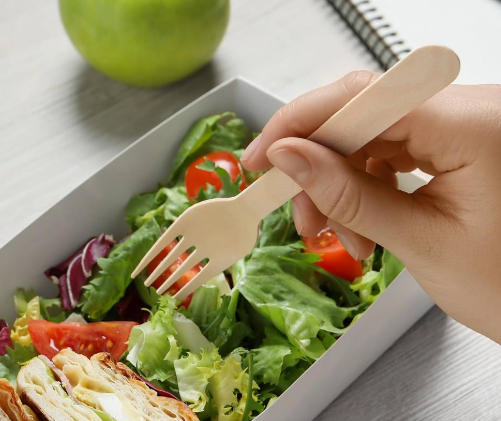
Wooden and bamboo forks remain one of the simplest and most widely accepted alternatives to plastic. These products are typically made from certified wood, uncoated and unvarnished, making them fully biodegradable and compostable under appropriate conditions.
European suppliers such as SIER offer disposable wooden forks that are biodegradable and often individually packed with a napkin in a paper bag for catering and street‑food applications. This format is widely used by French bars, bistros, bakeries, and street‑food concepts that want a natural look and a clear eco‑message.
Leading French and France‑Focused Suppliers
When evaluating Compostable Forks Manufacturers And Suppliers in France, international buyers should look at both France‑based innovators and global manufacturers with strong presence in the French and EU markets. Below are representative examples of real companies active in this segment.
Packnwood – Design‑Driven Eco Tableware
Packnwood is a French brand headquartered in Paris that focuses on premium foodservice packaging made from materials such as bamboo, wood, paper, and biobased materials. The company provides trays, cups, containers, and a broad selection of cutlery solutions designed for restaurants, hotels, and catering businesses that require stylish, eco‑friendly presentation.
As one of the recognized Compostable Forks Manufacturers And Suppliers in France, Packnwood combines sustainability with French design, offering wooden forks, bamboo forks, and compostable biopolymer options. Its global distribution network makes it attractive for overseas buyers who need a European‑recognized brand partner for their eco‑cutlery programs and private‑label projects.
Noyatech – Olive‑Stone Biobased Cutlery
Noyatech is an innovative company providing straws and cutlery made from olive stones, a by‑product of the agri‑food industry, marketed in France through local distributors and partners. The cutlery is bio‑sourced and plastic‑free, designed to be reused many times and to decompose more quickly at the end of its life in suitable conditions.
For buyers seeking unique, story‑driven Compostable Forks Manufacturers And Suppliers, Noyatech's olive‑stone technology offers a strong marketing angle around circular economy and waste valorization. The products are suitable for hospitality, retail, corporate events, and large‑scale distribution, and can be integrated into broader sustainable packaging programs and brand narratives.
Koovee – Edible and Zero‑Waste Cutlery
Koovee is known for manufacturing edible cutlery made from organic, biscuit‑type formulations, fully produced in France with local raw materials. The company targets foodservice operators that want to completely eliminate cutlery waste by allowing customers to literally eat the spoon or fork after use or simply dispose of it without leaving plastic residue.
Although Koovee is not a traditional industrial Compostable Forks Manufacturers And Suppliers, it provides a highly differentiated solution that is biodegradable and zero‑waste, appealing to high‑end catering, events, festivals, and innovative restaurant concepts in France. Buyers can position these edible forks as a premium add‑on within a sustainable menu or as a marketing highlight in eco‑campaigns.
European Wooden Fork Suppliers Used in France
French distributors also work with European wooden cutlery manufacturers like SIER, which supplies disposable wooden forks with sustainability certifications. SIER offers biodegradable wooden fork packs, often coupled with napkins in paper bags, primarily for bars, bistros, coffee shops, and finger‑food operations.
These products show how Compostable Forks Manufacturers And Suppliers from neighboring countries complement the French market with competitive wooden options that meet eco‑requirements and practical needs. Such suppliers are commonly integrated into the sourcing portfolios of French wholesalers, importers, and foodservice distributors that serve small and medium‑sized customers across the country.
Global OEM Producers with French Presence
Some large OEM factories specializing in bagasse and biodegradable tableware maintain a European business center in Strasbourg, France to support local clients. These manufacturers operate high‑capacity automated production lines with significant annual output and provide strict raw‑material control, full visual inspection, and comprehensive quality and environmental certifications.
For international brand owners and wholesalers, such OEM factories are attractive Compostable Forks Manufacturers And Suppliers because they can offer custom molding, packaging design, product testing, and long‑term capacity planning. Their French or European office simplifies communication, sampling, and logistics coordination into the EU, which is especially valuable for private‑label compostable forks, cutlery kits, and combined tableware programs.
How to Evaluate Compostable Fork Suppliers
Selecting the right Compostable Forks Manufacturers And Suppliers in France requires a structured evaluation that goes beyond basic price comparison. Buyers should consider at least the following dimensions when screening potential partners.
Certification and Compliance
Regulatory compliance is critical for compostable forks in the EU market. Key points to check include:
- Compliance with recognized compostability standards such as EN 13432 or equivalent industrial compostability documentation.
- Additional certifications such as food‑contact safety reports, quality management systems, and environmental management certificates, which demonstrate consistent production practices.
- Clear labeling and documentation for compostable forks, including usage instructions and disposal guidelines suitable for the French waste‑management framework.
Compostable Forks Manufacturers And Suppliers that can provide a complete certification package reduce compliance risk and shorten the listing process with major French retailers and foodservice groups.
Material Performance and User Experience
A compostable fork must not only be eco‑friendly but also functional for end users. Evaluation criteria include:
- Rigidity and resistance to breaking when used with common French and European dishes such as salads, pasta, pastries, and grilled foods.
- Heat resistance for hot meals and stability in contact with sauces, oils, and acidic ingredients.
- Mouthfeel and taste neutrality, especially for wooden or plant‑fiber forks that come into direct contact with the lips for extended periods.
Samples from candidate Compostable Forks Manufacturers And Suppliers should be tested in real foodservice conditions before confirming a large OEM order, ideally including stress tests in busy service environments.
Design, Branding, and Packaging Options
For brand owners and wholesalers, customization capabilities are a major differentiator among Compostable Forks Manufacturers And Suppliers. Important considerations are:
- Ability to print logos or messages on packaging and, where technically feasible, on the forks themselves by embossing or laser marking.
- Availability of combined cutlery sets (fork, knife, spoon, and napkin) in paper bags, sleeves, or boxes suitable for retail, takeaway, and delivery platforms.
- Flexibility in carton sizes, inner packaging, labeling, and barcoding to fit different channels such as supermarkets, e‑commerce, foodservice distributors, and vending solutions.
French buyers often prefer suppliers that can deliver a coherent branded range of compostable forks and related products instead of single SKUs, which simplifies shelf management and marketing campaigns.
Capacity, Lead Time, and Logistics
Stable supply is essential, especially for national chains and large caterers. Buyers should verify:
- Annual production capacity for compostable forks and overall tableware lines, including potential expansion plans.
- Standard lead times for different order sizes and the supplier's flexibility in handling urgent orders or seasonal peaks.
- Availability of European warehousing or a local business center in France to help manage buffer stocks, customs procedures, and last‑mile delivery.
Compostable Forks Manufacturers And Suppliers with established export experience and European support functions can significantly reduce supply‑chain risk and improve planning for large clients.
Sustainability, Transparency, and Marketing Support
Beyond basic technical performance, many French buyers expect partners to contribute to their sustainability storytelling. Factors to evaluate include:
- Transparency about raw materials, including origin of fibers, wood species, or agricultural by‑products.
- Life‑cycle information, such as carbon footprint data or waste‑reduction metrics that can be used in corporate social responsibility reports.
- Availability of marketing content, point‑of‑sale material, and digital assets that help retailers and restaurants explain compostable forks to end consumers.
Compostable Forks Manufacturers And Suppliers that actively support marketing and education can help brands increase consumer trust and justify premium positioning.

Opportunities for OEM and Private‑Label Buyers
The French market offers attractive opportunities for overseas brand owners, wholesalers, and manufacturers that work with specialized Compostable Forks Manufacturers And Suppliers. Many retailers and foodservice groups are expanding their own private‑label lines of compostable forks, spoons, knives, and tableware, leaving room for new designs, materials, and co‑branding initiatives.
OEM‑capable manufacturers with strong research and development in plant fibers, sugarcane bagasse, or innovative biopolymers can cooperate with French partners to develop customized fork shapes, sizes, and surface textures tailored to local cuisine and consumer preferences. Foreign factories can thereby become long‑term Compostable Forks Manufacturers And Suppliers to French brands, wholesalers, and importers.
Another opportunity lies in developing complete eco‑tableware collections: compostable forks, knives, spoons, stirrers, plates, bowls, and food containers under a unified design language. This strategy allows retailers and foodservice groups to present a consistent environmental message and simplifies procurement, since all products are sourced from the same coordinated supply base.
International OEM producers can also support French clients with packaging engineering, for example by creating compact, transport‑efficient bundles that reduce shipping emissions and storage costs. In addition, the use of bilingual or multilingual packaging artwork helps French buyers re‑export or distribute products across other EU markets.
For foreign factories that specialize in compostable forks and related products, positioning as a reliable OEM partner for French distributors can create long‑term, mutually beneficial relationships. Offering competitive pricing, flexible minimum order quantities, stable quality, and responsive communication are decisive factors in winning repeat business from professional buyers.
Best Practices When Sourcing Compostable Forks in France
To make the most of the dynamic French market, buyers should follow several best practices when working with Compostable Forks Manufacturers And Suppliers:
- Conduct on‑site or virtual audits of factories where possible, focusing on quality systems, hygiene, and environmental management.
- Request detailed product specifications, material data sheets, and test reports before placing initial orders.
- Start with pilot orders to verify real‑life product performance in restaurants, catering operations, and retail environments.
- Define clear quality standards, acceptable defect rates, and packaging requirements in written agreements with suppliers.
- Maintain regular communication with key Compostable Forks Manufacturers And Suppliers to anticipate regulatory changes, material innovations, and market trends.
By following these practices, importers, wholesalers, and brand owners can build stable sourcing programs that combine sustainability, cost‑effectiveness, and reliable supply.
Conclusion
France is one of the leading European markets for compostable cutlery, and demand for reliable Compostable Forks Manufacturers And Suppliers continues to grow across retail, hospitality, catering, and event sectors. Buyers can choose among French innovators like Packnwood, Noyatech, and Koovee, European wooden fork specialists such as SIER, and high‑capacity international OEM producers with a presence in France to build a robust and sustainable fork sourcing strategy.
By focusing on certifications, material performance, design flexibility, sustainability transparency, and supply‑chain strength, international brand owners, wholesalers, and manufacturers can secure competitive OEM and private‑label partnerships with leading Compostable Forks Manufacturers And Suppliers serving the French market. This approach aligns regulatory compliance with strong environmental positioning and long‑term commercial growth.
FAQ
1. What certifications should compostable forks for France have?
Compostable forks for the French and EU markets should ideally comply with recognized compostability standards that demonstrate industrial compostability and safe breakdown into non‑toxic components. Additional quality and safety certifications such as food‑contact approvals, quality management, and environmental management give further assurance that the Compostable Forks Manufacturers And Suppliers operate under strict management and hygiene systems.
2. Are wooden forks fully compostable?
Wooden forks made from certified, uncoated wood are fully biodegradable and can be composted under appropriate conditions, provided they are disposed of in suitable waste streams. Because they come from renewable sources and use minimal processing, these products are widely accepted as eco‑friendly alternatives by French distributors and consumers, especially when combined with paper or cardboard packaging.
3. Can OEM manufacturers outside France supply the French market effectively?
Yes, many OEM Compostable Forks Manufacturers And Suppliers operate production in other regions but maintain a European business center in France or nearby countries to support local customers. With strong certifications, export experience, multilingual sales teams, and local service support, these suppliers can provide competitive plant‑fiber and bagasse forks into France while ensuring compliant documentation and reliable logistics.
4. What are the advantages of plant‑fiber or bagasse forks compared with PLA forks?
Plant‑fiber and bagasse forks often use agricultural waste such as sugarcane residues, supporting a low‑carbon, circular‑economy model and reducing dependence on traditional plastics or single‑source bio‑plastics. Many bagasse products deliver good rigidity, heat resistance, and a natural look that appeals to eco‑conscious French consumers, while also helping brands communicate their commitment to responsible resource use.
5. How can brands differentiate their compostable fork offerings in France?
Brands can differentiate by working with Compostable Forks Manufacturers And Suppliers that offer innovative materials such as olive‑stone or edible cutlery, distinctive fork designs, and customized packaging solutions. Combining certified sustainability with strong visual identity, creative storytelling, and clear end‑of‑life guidance helps products stand out in the competitive French market and encourages consumers to participate in responsible disposal practices.
Citations:
1. https://www.noyatech.fr/pailles-couverts-noyau-olive-france-noyatech
2. https://www.bioleaderpack.com/top-12-biodegradable-compostable-cutlery-manufacturers-in-the-world-2025/
3. https://www.sincerepacking.com/compostable-plates-and-bowls
4. https://pro.koovee.co/en
5. https://gammo.eu/sier-60102-biodegradable-fork-from-fsc-wood-with-napkin-in-paper-bag-160-mm-100pcs-box
6. https://www.sincerepacking.com/biodegradable-compartment-plates
7. https://foogogreen.com/cutlery/
8. https://renouvo.net/shop/compostable-sugarcane-cutlery/compostable-forks/compostable-sugarcane-forks-individually-wrapped/
9. https://www.anchenggy.com/disposable-tableware/
10. https://www.quadria.eu/en/product/biodegradable-tableware/


