Content Menu
● Hungary's Role in the European Compostable Cutlery Market
● Main Materials Used by Compostable Forks Manufacturers And Suppliers
>> Wooden and Bamboo Forks
>> PLA and CPLA Bioplastic Forks
>> Advanced Biocomposites
● Leading Hungary‑Based Companies Involved in Compostable Forks
>> Vilhemp
>> EURO‑SOLUTIONS Kft.
>> SIER Biodegradable Cutlery Sets Distributed in Hungary
● International Compostable Forks Manufacturers And Suppliers Serving Hungary
>> Vegware
>> BioPak
>> Packnwood
>> MVI ECOPACK
● Typical Product Portfolios of Compostable Forks Manufacturers And Suppliers
>> Standard Wooden Forks
>> Bioplastic Forks (PLA and CPLA)
>> Biocomposite and Reusable Forks
>> Forks in Pre‑Packed Sets
● Key Certifications and Standards
● OEM, Private‑Label and Customization Options
● How to Select the Right Compostable Forks Manufacturers And Suppliers in Hungary
● Conclusion
● FAQ
>> 1. What are the most common materials used by Compostable Forks Manufacturers And Suppliers in Hungary?
>> 2. Are compostable forks more expensive than traditional plastic forks?
>> 3. Can I create a private‑label brand using Compostable Forks Manufacturers And Suppliers in or for Hungary?
>> 4. What certifications should I request from Compostable Forks Manufacturers And Suppliers?
>> 5. How can I compare different Compostable Forks Manufacturers And Suppliers effectively?
Hungary is becoming an increasingly attractive sourcing hub in Central Europe for eco‑friendly disposable cutlery, especially for buyers searching for reliable Compostable Forks Manufacturers And Suppliers that can serve both local and cross‑border markets. For international brands, wholesalers and manufacturers, this Central European country offers access to innovative biomaterials, strong regional logistics and growing environmental awareness.
As EU regulations on single‑use plastics tighten and consumer expectations shift toward greener solutions, the demand for compostable forks and other sustainable tableware keeps rising. Importers, foodservice chains and retailers who understand the landscape of Compostable Forks Manufacturers And Suppliers in Hungary can build flexible and cost‑effective supply chains that still comply with sustainability and food‑contact rules.
Hungary's Role in the European Compostable Cutlery Market
Hungary sits strategically between Western Europe and Eastern Europe, making it an efficient logistics hub for regional distribution of eco‑friendly products. This geographic advantage supports distributors and manufacturers who want to move compostable forks quickly to neighboring markets such as Austria, Slovakia, Romania and the Balkans.
At the same time, Hungary participates actively in EU environmental policies, including initiatives to phase down conventional single‑use plastics. This policy context encourages local distributors, packaging companies and innovators to develop or source compostable forks and other eco‑tableware that align with European directives.
Biopolymer research and pilot projects focusing on sustainable packaging have also been launched in Hungary. These initiatives explore how biomass‑derived materials, advanced biocomposites and innovative processing technologies can be used to create products like forks, caps, trays and small containers. Over time, these projects are expected to strengthen the base of Compostable Forks Manufacturers And Suppliers in the country and attract more investment.
Main Materials Used by Compostable Forks Manufacturers And Suppliers
When sourcing from Compostable Forks Manufacturers And Suppliers that serve the Hungarian market, buyers will usually encounter several key material types. Each material offers different performance levels, price points and end‑of‑life options.
Wooden and Bamboo Forks
Wooden forks are among the most widely used options in Europe for eco‑friendly disposable cutlery. Many Compostable Forks Manufacturers And Suppliers offer birch‑wood forks, often certified by FSC to ensure responsible forestry practices. These forks typically have a natural look, smooth finish and comfortable grip, which suits street‑food vendors, casual restaurants and event catering.
Bamboo forks follow similar sustainability logic. Bamboo grows quickly and can be harvested with relatively low environmental impact compared with slow‑growing hardwoods. Though bamboo cutlery is slightly less common than birch in some Central European markets, it remains a popular choice for premium or Asian‑inspired food concepts.
PLA and CPLA Bioplastic Forks
PLA (polylactic acid) and its crystallized version CPLA are starch‑based bioplastics widely used by Compostable Forks Manufacturers And Suppliers worldwide. These materials are designed for industrial composting and can offer a “plastic‑like” eating experience. CPLA forks, in particular, provide better heat resistance and rigidity, making them suitable for hot foods.
In Hungary, PLA and CPLA forks reach the market mainly through international Compostable Forks Manufacturers And Suppliers that sell via local distributors. These products often carry compostability certifications that comply with European standards, which is important for institutional buyers and large retail chains.
Advanced Biocomposites
Beyond wood and PLA, some Compostable Forks Manufacturers And Suppliers are moving into advanced biocomposites that blend natural fillers with biobased binders. These materials aim to deliver durability and design flexibility while maintaining lower environmental impact compared with conventional plastics.
Biocomposites are particularly attractive for reusable or semi‑durable forks, such as those used in workplace canteens, event rental systems or deposit‑return schemes. Hungary's participation in biopolymer projects creates a platform for these new materials to enter local markets and gradually expand their presence in the eco‑tableware segment.
Leading Hungary‑Based Companies Involved in Compostable Forks
Although Hungary's compostable fork manufacturing base is still developing, several companies and brands play important roles in distributing, promoting or producing sustainable cutlery and related products. Below are some of the most relevant names that international buyers should know when researching Compostable Forks Manufacturers And Suppliers in Hungary or for Hungary.
Vilhemp
Vilhemp is a Hungary‑based company that focuses on innovative, plant‑based materials for tableware and drinking accessories. It has developed a proprietary natural raw material designed to replace conventional plastics in items such as knives, forks, drinking straws and ice‑cream spoons.
This company positions itself at the intersection of material science and sustainability, offering solutions that align with the circular economy. Its products target environmentally conscious consumers and businesses, including cafés, restaurants, bars and hospitality projects. For buyers looking for Compostable Forks Manufacturers And Suppliers rooted in Hungary, Vilhemp is an important example of local innovation.
Vilhemp's forks and other items are designed to reduce plastic usage while providing a pleasant user experience, with attention to design, robustness and branding potential. The company demonstrates how Hungarian innovators can push the boundaries of eco‑friendly materials in the compostable cutlery sector.
EURO‑SOLUTIONS Kft.
EURO‑SOLUTIONS Kft. is a Budapest‑based company that operates in the packaging and disposable goods segment and offers sustainable alternatives, including biodegradable and compostable forks made from advanced biobased materials. In its portfolio, customers can find forks produced from innovative biocomposites that combine natural fillers with biobased binders.
These forks are designed to be more environmentally responsible than conventional plastic cutlery while still offering familiar performance in terms of appearance, stiffness and usability. As a distributor and solutions provider, EURO‑SOLUTIONS Kft. connects Hungarian foodservice operators, retailers and event organizers with modern Compostable Forks Manufacturers And Suppliers and material technologies.
International buyers that cooperate with EURO‑SOLUTIONS Kft. can leverage this local expertise to access a range of sustainable tableware, including compostable forks, knives and spoons that are appropriate for various foodservice formats. This makes the company a useful partner in any Central European sourcing strategy.
SIER Biodegradable Cutlery Sets Distributed in Hungary
SIER is a producer of biodegradable single‑use products known for its “Think Green” line of wooden and plant‑based tableware. Its portfolio includes wooden forks, knives and spoons that are commonly packed as cutlery sets with a napkin in a paper bag, designed for takeaway and event catering.
While SIER is not a Hungarian manufacturer, its products are distributed into Hungary and neighboring markets through local partners and e‑commerce platforms. For this reason, SIER's range is highly relevant for buyers mapping out Compostable Forks Manufacturers And Suppliers that practically serve the Hungarian market.
The company uses FSC‑certified wood and other natural materials such as bamboo, sugarcane and palm leaf. This approach aligns with EU sustainability requirements and helps buyers present a coherent eco‑friendly message to end consumers. Food trucks, festivals, catering firms and hotels across Central Europe can benefit from these ready‑to‑use biodegradable fork sets.
International Compostable Forks Manufacturers And Suppliers Serving Hungary
Because Hungary is a mid‑sized market, many local distributors and wholesalers rely on global Compostable Forks Manufacturers And Suppliers to build comprehensive product assortments. These international producers supply large volumes and a variety of materials, from wood and bamboo to PLA, CPLA and bagasse.
Vegware
Vegware, headquartered in the United Kingdom, is one of the most recognized brands in compostable foodservice packaging. It supplies CPLA and PLA cutlery, including forks, that conform to European and international compostability standards.
Vegware's product lines are popular with universities, corporate canteens, cafés and caterers that want to shift away from conventional plastics. For Hungarian distributors, Vegware offers consistent quality, strong branding and reliable certification documentation, all of which are important when competing in the eco‑tableware segment.
BioPak
BioPak is another global specialist in compostable packaging and cutlery, with a strong presence in Europe and other regions. It produces PLA and PSM (plant starch material) forks and cutlery sets and collaborates with composting partners to ensure that its products fit into practical waste‑management systems.
Hungarian buyers who import from BioPak gain access to a broad range of compostable forks and related items, backed by clear environmental branding and technical support. This is particularly valuable for larger restaurant groups and retail chains that need consistent supply across multiple countries.
Packnwood
Packnwood is a French‑based company that focuses on stylish, eco‑friendly packaging and tableware, offering wooden, bamboo and bioplastic forks. Its designs often emphasize presentation and aesthetics, making them suitable for premium catering, hotels and high‑end food retailers.
As an option among international Compostable Forks Manufacturers And Suppliers, Packnwood gives Hungarian distributors and end users access to cutlery that not only reduces environmental impact but also upgrades the look of the food service. This can help food brands differentiate themselves in competitive urban markets.
MVI ECOPACK
MVI ECOPACK is a Chinese manufacturer of biodegradable disposable tableware that exports worldwide. Its product range includes tableware made from bagasse, cornstarch, wheat‑straw and other plant‑based materials. Among its items are compostable forks and cutlery sets suitable for various cuisines and service formats.
For importers and wholesalers in Central Europe, MVI ECOPACK provides large‑scale OEM capabilities, competitive pricing and customizable solutions. Hungarian distributors often combine such global OEM products with locally sourced items to improve flexibility and manage costs. This makes MVI ECOPACK an important reference among Compostable Forks Manufacturers And Suppliers for any buyer considering mixed sourcing strategies.
Typical Product Portfolios of Compostable Forks Manufacturers And Suppliers
When evaluating Compostable Forks Manufacturers And Suppliers that serve the Hungarian market, buyers will encounter several recurring product types. Understanding these categories helps in specifying the right items for each application.
Standard Wooden Forks
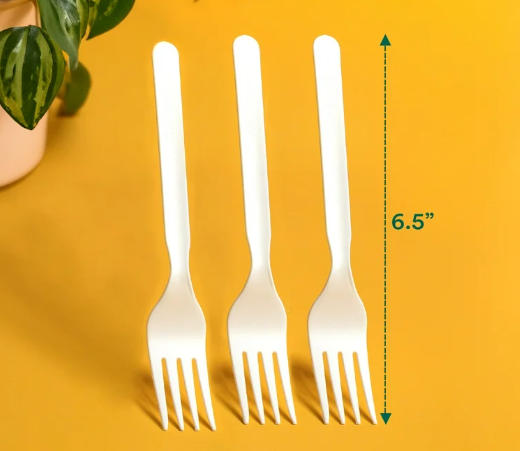
Standard wooden forks usually range from about 160 mm to 180 mm in length and are designed for single‑use in casual foodservice. They may come as individual items in bulk packaging or as part of a wrapped set with knife, spoon and napkin.
These forks are ideal for street food, take‑away meals, festivals and office catering. Their neutral look and natural feel align with eco‑branding and are easy for consumers to understand. Many brands print “100% wood” or similar messages on packaging to highlight the difference from plastic.
Bioplastic Forks (PLA and CPLA)
Bioplastic forks made from PLA or CPLA often resemble traditional plastic cutlery in appearance and ergonomics. They can be transparent, white or colored, and can be customized with logos or patterns for private‑label clients.
These forks are particularly suitable for cold dishes, salads, desserts and hot meals depending on the specific material and design. Compostability is tied to industrial composting conditions, so it is important for buyers to educate customers about appropriate disposal routes.
Biocomposite and Reusable Forks
Some Compostable Forks Manufacturers And Suppliers now offer forks made from advanced biocomposites or biobased materials intended for multiple uses. These products can be thicker, heavier and more visually distinctive than single‑use wooden or PLA forks.
They are often used in canteen systems, deposit‑return schemes or events where collection and washing logistics are in place. For sustainability‑oriented institutions and corporate campuses in and around Hungary, such forks can reduce waste while maintaining an eco‑friendly narrative.
Forks in Pre‑Packed Sets
Many buyers prefer to purchase forks as part of pre‑packed sets including a knife, spoon and sometimes a napkin or seasoning sachet. Compostable Forks Manufacturers And Suppliers that can assemble such sets in paper bags or compostable wrappers offer an operational advantage to quick‑service restaurants and delivery platforms.
These sets streamline service, help control hygiene and make inventory management easier. When combined with compostable plates, cups and boxes, they provide a complete eco tableware package.
Key Certifications and Standards
Certifications play a central role when comparing Compostable Forks Manufacturers And Suppliers and verifying product claims. European buyers typically look for several types of documentation.
- Compostability standards: EN13432 is the main European reference for industrial compostability of packaging and single‑use items made from bioplastics. Third‑party certifications aligned with this standard reassure customers about end‑of‑life performance.
- Forestry certifications: FSC (Forest Stewardship Council) certification is essential for wooden forks, ensuring that raw material comes from responsibly managed forests.
- Food‑contact approvals: All forks used for food must comply with applicable food‑contact regulations. Suppliers should provide declarations of conformity and test reports covering migration limits and hygiene standards.
Compostable Forks Manufacturers And Suppliers that can provide clear, up‑to‑date documentation make it easier for Hungarian importers, distributors and end users to pass audits, satisfy retail requirements and communicate credibly with consumers.
OEM, Private‑Label and Customization Options
Many brands and wholesalers want to create their own private‑label lines of eco‑friendly tableware. For them, the OEM capabilities of Compostable Forks Manufacturers And Suppliers are a decisive factor.
Large international manufacturers, including Chinese factories and global brands, can offer:
- Custom packaging designs featuring the buyer's logo, colors and messaging.
- Fork color options, embossing or printing for better brand recognition.
- Mixed cartons containing assorted fork, knife and spoon sets tailored to specific menus.
- Flexible order quantities and shipping arrangements to Central Europe.
Hungarian distributors often act as intermediaries, coordinating private‑label projects between local brands and overseas Compostable Forks Manufacturers And Suppliers. This approach allows smaller and medium‑sized companies in Hungary to launch eco‑friendly fork lines without investing in their own manufacturing facilities.
How to Select the Right Compostable Forks Manufacturers And Suppliers in Hungary
Choosing reliable partners among Compostable Forks Manufacturers And Suppliers requires a structured evaluation process. Buyers can follow several practical steps:
1. Clarify application and performance needs
Define whether forks will be used for hot or cold dishes, casual or premium environments, single‑use or semi‑reusable concepts. This will narrow down the suitable materials and designs.
2. Verify certifications and documentation
Request compostability certificates, FSC documentation for wooden products and food‑contact test reports. Make sure documents are recent and refer to the exact products you plan to purchase.
3. Test samples for real‑world performance
Conduct internal tests to check fork stiffness, mouthfeel, splinter resistance (for wood), and behavior with oily or hot foods. Involve kitchen staff and customers in the evaluation where possible.
4. Check OEM and branding options
If you need private‑label packaging or personalized designs, confirm that the Compostable Forks Manufacturers And Suppliers can support your artwork, packaging format and volume requirements.
5. Assess logistics and service
Look at lead times, production capacity, safety stocks in Europe, and responsiveness of the sales and support teams. Reliable service is as crucial as product quality.
By following these steps, buyers can build a shortlist of strong candidates in Hungary and abroad, then develop long‑term relationships that ensure stable, sustainable supply.
Conclusion
Hungary is gradually strengthening its position in the European market for eco‑friendly disposable cutlery, supported by its strategic location, participation in EU environmental policies and engagement in biopolymer innovation. Local companies such as Vilhemp and EURO‑SOLUTIONS Kft., together with biodegradable ranges distributed from producers like SIER, form an important base of Compostable Forks Manufacturers And Suppliers serving foodservice, retail and events.
At the same time, global Compostable Forks Manufacturers And Suppliers like Vegware, BioPak, Packnwood and MVI ECOPACK provide complementary capacity, material diversity and OEM capabilities, enabling Hungarian buyers to combine local innovation with international scale. By carefully evaluating materials, certifications, OEM options and logistics, brands, wholesalers and manufacturers can build flexible sourcing strategies that meet regulatory requirements while appealing to environmentally conscious customers across Central Europe.

FAQ
1. What are the most common materials used by Compostable Forks Manufacturers And Suppliers in Hungary?
The most common materials are FSC‑certified wood, PLA and CPLA bioplastics, and increasingly advanced biocomposites designed to reduce reliance on conventional plastics. Each material offers different performance levels and end‑of‑life options, such as home composting for wood and industrial composting for many bioplastics.
2. Are compostable forks more expensive than traditional plastic forks?
In general, compostable forks cost more than standard plastic forks because of higher raw‑material and certification costs. However, many buyers consider the price difference acceptable when they factor in branding benefits, regulatory compliance and the ability to participate in eco‑friendly tenders or sustainability programs.
3. Can I create a private‑label brand using Compostable Forks Manufacturers And Suppliers in or for Hungary?
Yes. Many Compostable Forks Manufacturers And Suppliers, especially large international factories and global brands, offer OEM and private‑label services. Hungarian distributors can help coordinate custom packaging, artwork and mixed cutlery sets so that you can launch your own branded eco‑friendly fork and tableware lines.
4. What certifications should I request from Compostable Forks Manufacturers And Suppliers?
You should ask for EN13432 or equivalent compostability certifications for bioplastic products, FSC certification for wooden forks and valid food‑contact declarations for all items. These documents help you meet regulatory obligations, pass audits and transparently communicate the environmental benefits of your products to customers.
5. How can I compare different Compostable Forks Manufacturers And Suppliers effectively?
Start by defining your technical requirements, then compare suppliers based on material options, certification portfolios, OEM capabilities, lead times, minimum order quantities and customer service. Request samples from multiple Compostable Forks Manufacturers And Suppliers, conduct practical tests, and consider total cost of ownership, including logistics, before making a final decision.


