Content Menu
● Why Turkey Is Attractive for Compostable Forks Sourcing
● Main Materials Used by Compostable Forks Manufacturers And Suppliers
>> Wooden compostable forks
>> PLA and CPLA compostable forks
>> Fiber‑based and molded‑pulp forks
● Overview of Leading Turkish Compostable Forks Manufacturers And Suppliers
>> Vav Kağıt Ambalaj Sanayi ve Ticaret A.Ş.
>> Balcı Packing
>> Nazkaya
>> NEOGROUP and other Turkish wooden cutlery exporters
● How International Buyers Can Work With Turkish Compostable Forks Manufacturers And Suppliers
>> Step 1: Clarify technical specifications
>> Step 2: Assess certification and legal compliance
>> Step 3: Order samples and perform tests
>> Step 4: Negotiate terms and develop OEM packaging
● OEM and Private‑Label Opportunities
● Quality Control and Risk Management
● Logistics and Consolidation Advantages
● Sustainability and Market Trends
● How Buyers Can Differentiate Using Turkish Compostable Forks
● Conclusion
● FAQ
>> 1. What types of compostable forks can I source from Turkey?
>> 2. Can Turkish suppliers support private‑label and OEM branding?
>> 3. How do I verify quality and compliance when buying from Turkey?
>> 4. Are Turkish Compostable Forks Manufacturers And Suppliers cost‑effective compared with other regions?
>> 5. What kinds of buyers benefit most from sourcing compostable forks in Turkey?
Turkey is becoming an increasingly strategic sourcing hub for eco‑friendly disposable cutlery, and many international buyers now focus on finding reliable Compostable Forks Manufacturers And Suppliers in the Turkish market. For brands, wholesalers and OEM food‑packaging producers, choosing the right Compostable Forks Manufacturers And Suppliers in Turkey is essential to securing stable, sustainable and competitively priced fork supply.
Turkey's position between Europe, the Middle East and Central Asia, combined with its established packaging and plastics industries, gives local producers a strong foundation to develop compostable, biodegradable and bio‑based forks. As regulations on single‑use plastic intensify and consumers demand greener solutions, more Turkish factories are upgrading their product ranges and partnering with overseas buyers on private‑label compostable fork projects.
Why Turkey Is Attractive for Compostable Forks Sourcing
Turkey offers a number of practical advantages for buyers searching for Compostable Forks Manufacturers And Suppliers. First, its geographic location allows relatively short transit times to EU ports, Mediterranean countries and many Middle Eastern markets, which reduces lead times and freight costs compared with long‑distance sea transport. Second, Turkish manufacturers have decades of experience in food packaging, paper products and disposable tableware, so they understand food‑contact regulations and export documentation.
Another reason buyers value Turkish Compostable Forks Manufacturers And Suppliers is flexibility. Many factories are accustomed to OEM and private‑label work, meaning they can adapt fork designs, packaging formats and branding to specific customer requirements. This is helpful for retailers building eco‑friendly house brands, for foodservice distributors designing coordinated ranges for restaurants and cafés, and for importers who want to differentiate their offerings in competitive markets.
Main Materials Used by Compostable Forks Manufacturers And Suppliers
Compostable Forks Manufacturers And Suppliers in Turkey and their global partners commonly work with three main material categories: wooden forks, plant‑based bioplastic forks (such as PLA and CPLA) and fiber‑based forks made from agricultural waste or molded pulp. Each material has specific advantages, performance characteristics and regulatory considerations.
Wooden compostable forks
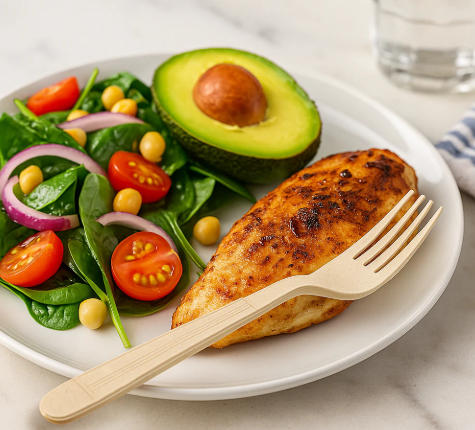
Wooden forks are often made from birchwood or other responsibly sourced woods. They are naturally biodegradable, free from conventional plastics and accepted by many composting and waste‑management systems. For many quick‑service restaurants, street food vendors and event organizers, wooden forks are a simple, robust and recognizable eco‑alternative to plastic.
Compostable Forks Manufacturers And Suppliers that focus on wooden cutlery usually offer ranges including forks, knives and spoons in multiple sizes, from tasting forks to full‑size dining pieces. Buyers can request different degrees of smoothness, edge finishing, and even custom embossing or printing on packaging to fit their brand image. Wooden forks are particularly popular in catering and takeaway concepts that want a natural, minimalistic, “back‑to‑nature” look aligned with sustainable branding.
PLA and CPLA compostable forks
PLA (polylactic acid) is a bio‑based polymer derived primarily from corn starch or other plant sources. CPLA is crystallized PLA, which offers better heat resistance and structural performance. Compostable Forks Manufacturers And Suppliers that produce CPLA forks aim to offer a smooth, plastic‑like feel with lower environmental impact compared with conventional PS or PP forks.
CPLA forks are especially suitable for hot foods and applications where users expect a more familiar cutlery experience. Many international brands use CPLA forks for premium takeaway meals, delivery services, office catering and airline catering. When working with Compostable Forks Manufacturers And Suppliers on CPLA products, buyers should verify compostability certifications and temperature‑resistance specifications to ensure the forks perform as required in their specific markets.
Fiber‑based and molded‑pulp forks
Fiber‑based forks made from bagasse (sugarcane waste), bamboo fiber or other agricultural by‑products are another emerging segment. While not yet as common as wooden or CPLA forks, they are increasingly part of the broader portfolios of Compostable Forks Manufacturers And Suppliers that cooperate internationally. These forks can be industrially compostable and support circular economy narratives by using waste streams as raw materials.
For buyers, such forks allow differentiation and storytelling around innovation and resource efficiency. They may be combined in product ranges with bagasse plates, trays and clamshell containers to build complete eco‑packaging concepts.
Overview of Leading Turkish Compostable Forks Manufacturers And Suppliers
Within Turkey, several real companies play important roles in the disposable tableware and packaging supply chain and are relevant for buyers searching for Compostable Forks Manufacturers And Suppliers. Many are expanding from traditional plastics into biodegradable and compostable alternatives, while others focus on wood, paper and packaging that supports eco‑friendly cutlery.
Vav Kağıt Ambalaj Sanayi ve Ticaret A.Ş.
Vav Kağıt Ambalaj Sanayi ve Ticaret A.Ş. is a Turkish manufacturer involved in disposable tableware and packaging products. As an experienced exporter, the company works with a variety of food‑service items and understands international standards for hygiene, quality and logistics. This background makes it a strong candidate for buyers looking for Compostable Forks Manufacturers And Suppliers capable of coordinating forks with plates, cups and other paper‑based packaging.
For overseas importers, Vav Kağıt Ambalaj can support OEM projects, custom packaging and branded solutions tailored to supermarket, café or catering channels. Its positioning in the Turkish market means it can also collaborate with specialized compostable fork producers, combining cutlery with locally produced napkins, bags or food boxes in consolidated shipments.
Balcı Packing
Balcı Packing is known as one of the leading producers of disposable plastic tableware and related packaging in Turkey. While the company has a strong background in traditional plastic cutlery, it is also part of the broader industry shift toward more sustainable alternatives. Buyers evaluating Compostable Forks Manufacturers And Suppliers in Turkey often include Balcı Packing in their supplier lists because of its production capacity, export experience and ability to manage large order volumes.
For customers transitioning from plastics to compostable solutions, a company like Balcı Packing can be a practical partner: they already understand injection molding, quality control and global distribution, and can gradually integrate biodegradable or compostable materials in line with market demand and regulatory timelines. This approach is valuable for distributors who still sell some conventional plastic forks but want to build up a strong compostable portfolio at the same time.
Nazkaya
Nazkaya is a Turkish manufacturer active in tableware and food‑packaging solutions. The company offers disposable cutlery, meal packaging products and customized serving concepts for catering, restaurant chains and institutional clients. Its broad focus on both packaging and tableware makes it relevant to buyers searching for Compostable Forks Manufacturers And Suppliers that can integrate forks into complete meal kits or packaging systems.
Importers and private‑label brands can work with Nazkaya to develop ready‑to‑use sets, such as fork‑napkin‑bag combinations or full cutlery kits, all packed in branded or neutral packaging. As demand for compostable options grows, this kind of integrated packaging competence helps foreign customers promote coherent eco‑friendly product ranges rather than buying forks and packaging from separate sources.
NEOGROUP and other Turkish wooden cutlery exporters
In addition to large tableware producers, Turkey hosts a range of wooden cutlery exporters, such as NEOGROUP Ambalaj Sanayi Ticaret Limited Şirketi and other companies listed in wooden cutlery export directories. These businesses specialize in wooden forks, knives and spoons and sell to wholesalers, distributors and retailers around the world.
Such wooden‑focused producers are essential components of the Turkish landscape of Compostable Forks Manufacturers And Suppliers, since wooden forks are straightforwardly biodegradable and well accepted by consumers who want to avoid plastic. Buyers can choose from different fork sizes and qualities, request custom printing on packaging, and coordinate shipments with other wooden and paper products.

How International Buyers Can Work With Turkish Compostable Forks Manufacturers And Suppliers
When approaching Turkish Compostable Forks Manufacturers And Suppliers, overseas buyers should start by defining their market requirements and brand positioning. Important questions include: which countries will the forks be sold in, what food‑contact and compostability standards must be met, and which sales channels (retail, foodservice, e‑commerce, cash‑and‑carry) will be targeted? Clear answers to these questions help suppliers propose suitable materials, designs and certifications.
Step 1: Clarify technical specifications
Buyers should prepare a basic technical sheet describing fork length, weight range, preferred material (wood, CPLA, fiber), color, and packaging format. For example, a supermarket private‑label brand might request 50‑piece packs of natural wood forks in printed retail bags, while a food‑service wholesaler may prefer bulk cartons of individually unwrapped forks for catering use. Providing such details early allows Compostable Forks Manufacturers And Suppliers to quote more accurately and avoid misunderstandings.
Step 2: Assess certification and legal compliance
Regulations vary between markets, so buyers must verify which standards are relevant in their target countries. This may include food‑contact safety documentation, migration tests, or industrial compostability standards. Reputable Compostable Forks Manufacturers And Suppliers should be familiar with these requirements and able to share test reports, certificates or declarations of conformity.
For compostable forks, buyers should also decide whether industrial compostability is sufficient, or whether they require additional claims such as home compostability, which are more demanding and may limit material options. Aligning expectations in advance prevents future disputes over marketing claims and labeling.
Step 3: Order samples and perform tests
After initial discussions, buyers should request samples from shortlisted Compostable Forks Manufacturers And Suppliers. These samples should be tested in real conditions: with hot and cold foods, oily dishes, firm foods like salads or pasta, and in the intended service environment (self‑service, delivery, dine‑in, etc.).
Important criteria include fork strength, comfort during use, tendency to splinter (for wooden forks), heat resistance (for CPLA forks), and whether there is any smell or taste transfer. Feedback from these practical tests should be shared with suppliers so they can adjust designs if necessary.
Step 4: Negotiate terms and develop OEM packaging
Once a supplier passes technical and quality requirements, buyers can negotiate pricing, minimum order quantities, payment terms and delivery schedules. At the same time, they can start developing OEM packaging and branding. Many Turkish Compostable Forks Manufacturers And Suppliers offer in‑house or partner printing services for bags, sleeves and boxes, which simplifies project management compared with sourcing packaging elsewhere.
Working closely on packaging design allows customers to highlight key selling points on the pack: compostability claims, material origin, certifications, and sustainability messages that resonate with consumers. Well‑designed packaging increases perceived value and makes compostable forks more appealing on retail shelves and in online listings.
OEM and Private‑Label Opportunities
OEM and private‑label cooperation is one of the biggest strengths of Turkish Compostable Forks Manufacturers And Suppliers. Because many Turkish factories are experienced exporters, they understand how to work with artwork files, barcodes, multi‑language packaging and the specific branding needs of different markets.
For example, a European supermarket chain might need standardized branding across several countries, with legal text in multiple languages on the same package. A food‑service distributor might want neutral, unbranded packaging that can be used by restaurant chains under their own internal labeling systems. Turkish suppliers can support both scenarios, tailoring production runs and packaging to each customer segment.
In addition, some Compostable Forks Manufacturers And Suppliers in Turkey maintain partnerships with global specialist factories producing CPLA or advanced fiber‑based forks. This means buyers can manage their projects via Turkish partners while still accessing cutting‑edge materials and technologies from other regions. For importers, this hybrid model offers a combination of innovation, logistics efficiency and local project management.
Quality Control and Risk Management
Reliable quality is essential for any long‑term cooperation with Compostable Forks Manufacturers And Suppliers. Buyers should take a structured approach to quality control from the beginning of the relationship.
First, they should agree on product specifications and reference samples that will be used as a benchmark for future shipments. Second, they should establish inspection procedures, which may include internal checks by the supplier, third‑party pre‑shipment inspections, or periodic on‑site audits. These steps reduce the risk of receiving forks that are too weak, poorly finished or inconsistent with certified materials.
Another dimension of risk management is supply continuity. Buyers should evaluate whether Compostable Forks Manufacturers And Suppliers have sufficient production capacity, backup machinery, and alternative raw‑material sources. For larger projects, some importers work with more than one Turkish supplier, or combine a Turkish supplier with another regional partner, to ensure resilience in case of unexpected demand spikes or disruptions.
Logistics and Consolidation Advantages
Logistically, Turkey provides several advantages for transporting compostable forks and related tableware. Sea freight from major Turkish ports to Europe and nearby regions is relatively fast, while road transport to neighboring countries allows flexible, smaller shipments. This is particularly useful for food‑service distributors and wholesalers who manage varied and seasonal demand.
Many Compostable Forks Manufacturers And Suppliers can coordinate mixed loads that combine forks with plates, cups, napkins and packaging items, allowing buyers to consolidate purchases into single containers or trucks. This reduces transport costs per item and simplifies customs and documentation. For importers that manage multiple product categories, working with a Turkish hub can significantly streamline operations.
Sustainability and Market Trends
Sustainability trends are reshaping the disposable tableware industry, and Turkish Compostable Forks Manufacturers And Suppliers are adapting accordingly. Regulations on single‑use plastics push food‑service operators and retailers to switch to compostable or biodegradable forks, which in turn encourages producers to expand their green portfolios. At the same time, consumers increasingly care about material origin, carbon footprint and end‑of‑life impact.
In response, manufacturers focus on cleaner production methods, responsible sourcing of wood and fibers, and transparent communication about compostability. Buyers who collaborate early with Turkish Compostable Forks Manufacturers And Suppliers can influence product development and align new lines with their own environmental, social and governance (ESG) strategies. This partnership approach creates long‑term value beyond simple price negotiations.
How Buyers Can Differentiate Using Turkish Compostable Forks
Working with Turkish Compostable Forks Manufacturers And Suppliers gives overseas brands and wholesalers opportunities to stand out in competitive markets. They can design unique fork shapes or textures that match their brand identity, develop color‑coded ranges for different food types, or integrate forks into complete meal kits.
In retail, well‑branded compostable forks from Turkish suppliers can tell a story about regional sourcing, innovation and environmental responsibility. In foodservice, customized forks can reinforce the image of restaurant chains or catering brands that position themselves as sustainable and quality‑focused. When combined with good marketing and clear communication about compostability, these products help end‑users feel that they are making a responsible choice.
Conclusion
Turkey is rapidly becoming a key hub for Compostable Forks Manufacturers And Suppliers serving Europe, the Middle East and other global markets. With companies involved in disposable tableware, packaging and wooden cutlery, Turkish industry offers a mix of material options, export experience and OEM flexibility that is highly attractive to overseas buyers.
By partnering with Turkish Compostable Forks Manufacturers And Suppliers, brands, wholesalers and OEM producers can secure reliable supplies of compostable forks, build strong private‑label ranges, and respond quickly to evolving environmental regulations. When supported by clear specifications, robust quality control and thoughtful packaging design, cooperation with Turkish suppliers can form the backbone of a successful, sustainable disposable cutlery strategy.

FAQ
1. What types of compostable forks can I source from Turkey?
You can typically source wooden forks, PLA or CPLA bioplastic forks and, via certain partners, fiber‑based or molded‑pulp forks from Turkish Compostable Forks Manufacturers And Suppliers. The exact range depends on each supplier's specialization and cooperation network.
2. Can Turkish suppliers support private‑label and OEM branding?
Yes. Many Turkish Compostable Forks Manufacturers And Suppliers are experienced exporters that work on private‑label projects. They can incorporate your logos, artwork, multi‑language text and barcodes into packaging for retail, foodservice or e‑commerce channels.
3. How do I verify quality and compliance when buying from Turkey?
You should request detailed specifications, samples and relevant test reports from Compostable Forks Manufacturers And Suppliers, including food‑contact certificates and, when needed, compostability documentation. It is also wise to perform your own functional tests and, for larger projects, consider third‑party inspections.
4. Are Turkish Compostable Forks Manufacturers And Suppliers cost‑effective compared with other regions?
In many cases, Turkish Compostable Forks Manufacturers And Suppliers offer a competitive balance between product cost, lead time and freight expenses, especially for European and Mediterranean markets. Shorter transit times and the possibility of mixed loads with other packaging can improve overall cost efficiency.
5. What kinds of buyers benefit most from sourcing compostable forks in Turkey?
Supermarket chains, food‑service distributors, catering companies, quick‑service restaurant brands and importers building eco‑friendly house brands all benefit from working with Turkish Compostable Forks Manufacturers And Suppliers. These buyers gain access to flexible OEM cooperation, multiple materials and convenient logistics for regional distribution.


