Content Menu
● Overview of the Philippine Disposable Cutlery Market
● Key Product Types and Materials
● Top Plastic Disposable Cutlery Manufacturers And Suppliers
>> Jucom Trading Corporation
>> Sweet Dynamics Corporation
>> Grand Champ Packaging
● Eco‑Focused Wooden and Bamboo Cutlery Suppliers
>> Econtainer Philippines
>> Simula PH
>> Other Eco‑Oriented Platforms and Aggregators
● International and Online Wholesale Channels Serving the Philippines
● How Global Buyers Work With Philippine Suppliers
>> OEM and Private‑Label Cooperation
>> Quality, Certification, and Compliance
>> Pricing, MOQs, and Logistics
● Market Trends and Future Outlook
● Why Consider the Philippines for Disposable Cutlery Sourcing?
● Conclusion
● FAQ
>> 1. What types of disposable cutlery are most common in the Philippines?
>> 2. Can Philippine suppliers support OEM and private‑label branding?
>> 3. Are eco‑friendly disposable cutlery options widely available?
>> 4. What quality checks should foreign buyers perform?
>> 5. What are key considerations for pricing and logistics?
● Citations:
The Philippines is becoming an important sourcing hub for global buyers looking for reliable Disposable Cutlery Manufacturers And Suppliers that can offer both cost‑effective plastic utensils and a growing range of eco‑friendly alternatives. The country's expanding food‑service, delivery, and hospitality sectors are driving strong demand for hygienic, convenient, and increasingly sustainable disposable cutlery solutions.
Overview of the Philippine Disposable Cutlery Market
The Philippine disposable cutlery market is closely tied to quick‑service restaurants, food delivery platforms, canteens, and catering companies that depend on single‑use spoons, forks, and knives for convenience and hygiene. Urbanization and the growth of online food delivery have significantly increased consumption of disposable tableware, including plastic and wooden cutlery.
At the same time, regulatory pressure and consumer awareness are pushing the market to transition from purely plastic‑based products toward biodegradable and compostable alternatives such as wooden and bamboo utensils. This means that Disposable Cutlery Manufacturers And Suppliers serving the Philippines must now balance low‑cost plastic production with the development or sourcing of greener lines.
Key Product Types and Materials
Disposable cutlery in the Philippines can be broadly divided into three categories: traditional plastic, biodegradable or compostable plastic, and natural materials such as birchwood or bamboo. Traditional PP and PS plastic spoons and forks still account for a large share of volume because they are cheap, durable enough for common meals, and easy to mass‑produce with injection molding.
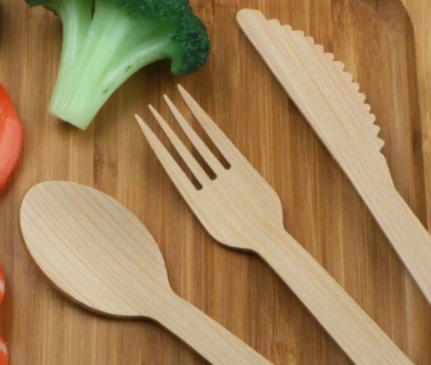
However, many buyers are now adding disposable wooden or bamboo cutlery as premium or eco‑branded options. These products are typically marketed as compostable or more environmentally responsible and are favored by cafés, hotels, and businesses that want to improve their sustainability image. For global brands and wholesalers, this dual structure allows combining high‑volume plastic lines with smaller but higher‑margin eco‑ranges from selected Disposable Cutlery Manufacturers And Suppliers.
Top Plastic Disposable Cutlery Manufacturers And Suppliers
Jucom Trading Corporation
Jucom Trading Corporation is a well‑known player in the Philippine plastic cutlery and food‑packaging segment. It supplies plastic spoons and related plastic cutlery items under established brands to supermarkets, retailers, and institutional customers such as canteens and food stalls. Its range typically includes standard‑size plastic spoons suitable for rice meals, soups, and desserts, emphasizing food‑grade materials and consistent quality.
For overseas buyers, Jucom functions more as a distributor and consolidator than as a pure factory brand, but this can be advantageous for importers who want to purchase multiple SKUs in one shipment. By working with such Disposable Cutlery Manufacturers And Suppliers and traders, foreign brands can source unbranded or neutrally branded products and then repack them under their own labels in their home markets.
Sweet Dynamics Corporation
Sweet Dynamics Corporation is another important supplier of plastic spoons and forks in the Philippines, serving bakeries, food kiosks, and small to mid‑size restaurants. Its plastic cutlery is usually supplied in clear or neutral packaging, making it easy for wholesalers to resell to food‑service operators that prioritize hygiene and practicality.
Because Sweet Dynamics offers a range of food packaging solutions in addition to disposable cutlery, buyers can consolidate spoon, fork, and container procurement through a single partner. For brands that want to build private‑label lines, such Disposable Cutlery Manufacturers And Suppliers can customize outer cartons, packing quantities, and, in some cases, printed bags to match specific market positioning.
Grand Champ Packaging
Grand Champ Packaging has grown into one of the more diversified Disposable Cutlery Manufacturers And Suppliers and distributors in the country, stocking plastic spoons, forks, sporks, and an expanding assortment of wooden cutlery. It works with multiple brands, including both value and biodegradable lines, allowing customers to select products according to price level and environmental positioning.
For international wholesalers, Grand Champ Packaging is attractive because it offers a broad catalogue of food‑service disposables beyond cutlery, such as cups, containers, and plates. This enables mixed‑container orders that improve freight efficiency and allow a single sourcing trip to cover a wide portion of a buyer's disposable packaging needs.
Eco‑Focused Wooden and Bamboo Cutlery Suppliers
Econtainer Philippines
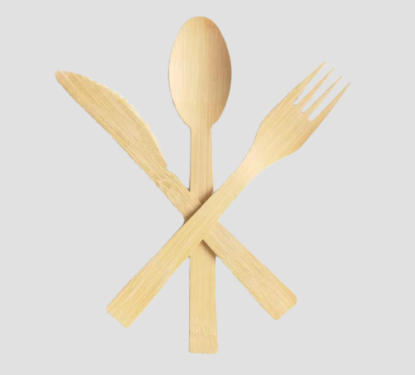
Econtainer Philippines is positioned as an eco‑friendly food packaging specialist, with a strong focus on sugarcane bagasse, biodegradable containers, and birchwood cutlery. Its wooden spoons, forks, and cutlery sets are targeted at environmentally conscious cafés, restaurants, and corporate clients seeking to move away from conventional plastics.
For global buyers looking to build greener product portfolios, Econtainer's offerings provide ready‑made SKUs that are already accepted in the local market. Working with such eco‑oriented Disposable Cutlery Manufacturers And Suppliers makes it easier to launch compostable or wooden cutlery lines in overseas markets without having to develop products from scratch.
Simula PH
Simula PH is primarily an eco‑lifestyle and zero‑waste retailer, but it also offers bamboo spoons, forks, and utensils that appeal to consumers who prioritize sustainability and design. These bamboo products are usually positioned as reusable or semi‑reusable, rather than just low‑cost disposables, thus occupying a more premium niche.
For export‑oriented wholesalers and brands, sourcing from players like Simula PH can complement bulk disposable cutlery with higher‑value bamboo items that command better margins. Although Simula is not a classic mass‑production plastic factory, it still forms part of the broader ecosystem of Disposable Cutlery Manufacturers And Suppliers serving the green segment of the market.
Other Eco‑Oriented Platforms and Aggregators
Aside from specialized brands, there are also online platforms and local wholesalers that curate birchwood and wooden disposable cutlery products from various sources. These platforms aggregate multiple small and mid‑size suppliers, making it easier for buyers to purchase wooden cutlery in smaller trial quantities.
Such channels are useful for importers who want to test eco‑friendly ranges before committing to larger OEM projects with a single manufacturer. Once volumes stabilize, buyers often transition from general platforms to direct partnerships with specific Disposable Cutlery Manufacturers And Suppliers that can offer better pricing and full customization.
International and Online Wholesale Channels Serving the Philippines
While the Philippines has its own domestic production and distribution base, a significant share of disposable cutlery is also sourced through international B2B marketplaces. On these platforms, buyers will find both Philippine‑based traders and foreign manufacturers that already supply the Philippine market with plastic spoons, forks, wooden cutlery, and chopsticks.
For foreign brands, these B2B channels serve two purposes. First, they make it easier to identify which Disposable Cutlery Manufacturers And Suppliers already have export experience and compliance documents for different regions. Second, they allow quick price comparisons and MOQ negotiations across multiple suppliers before a buyer invests time in detailed factory audits.
How Global Buyers Work With Philippine Suppliers
OEM and Private‑Label Cooperation
Many Philippine Disposable Cutlery Manufacturers And Suppliers are familiar with OEM and private‑label supply models, given the strong presence of local retail chains and food‑service companies. Buyers can usually request neutral or plain products packed in bulk master cartons, or they can develop branded packaging with custom artwork.
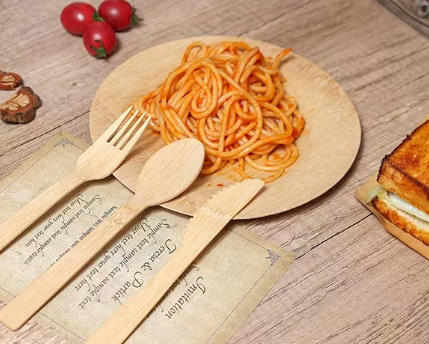
For example, a foreign supermarket brand might specify private‑label plastic spoon and fork sets in 25‑piece or 50‑piece retail bags, with barcodes and designs following its house style. For eco‑friendly wooden or bamboo cutlery, OEM projects may include single‑meal kits combining fork, knife, spoon, napkin, and sometimes a paper straw, all packed under the buyer's logo. When dealing with any Disposable Cutlery Manufacturers And Suppliers, clear communication of size, weight, color, and packaging expectations is essential for consistent results.
Quality, Certification, and Compliance
Food‑contact safety is a key concern for both domestic and international customers. Philippine suppliers typically emphasize that their plastic cutlery is made from food‑grade resins and that wooden or bamboo products are free from harmful coatings. Serious buyers should still verify material safety data, request documentation, and, when necessary, arrange third‑party testing.
Compliance requirements vary by destination market. Importers selling into the EU, North America, or other regulated regions must confirm that products from Disposable Cutlery Manufacturers And Suppliers meet relevant rules on plastics, heavy metals, and compostability claims. In practice, this usually involves collecting certificates, reviewing test reports, and including quality terms in supply contracts.
Pricing, MOQs, and Logistics
Pricing in the Philippine disposable cutlery sector is influenced by raw material costs, product thickness, packaging complexity, and order volume. Plastic spoons and forks remain the most economical in terms of cost per piece, while wooden and bamboo cutlery items are priced higher due to material and processing costs.
Typical minimum order quantities vary. Large industrial manufacturers may prefer full‑container orders for a single item, while distributors and trading companies can support smaller mixed orders suitable for market testing. Buyers should discuss palletization, carton strength, and labeling early in negotiations to ensure that products from Disposable Cutlery Manufacturers And Suppliers arrive safely and in compliance with import rules.
Market Trends and Future Outlook
The Philippine disposable cutlery market is expected to continue growing in line with the expansion of quick‑service restaurants, food delivery, and convenience‑oriented dining. Rising incomes and busier urban lifestyles make single‑use products attractive from a hygiene and time‑saving perspective.
At the same time, regulations and voluntary initiatives to reduce plastic waste are steadily reshaping the product mix toward biodegradable and reusable options. As technologies improve and economies of scale increase, biodegradable plastics, wooden cutlery, and bamboo utensils should gradually become more affordable. Disposable Cutlery Manufacturers And Suppliers that adapt early to these trends will be better positioned to capture new demand from both domestic and international eco‑conscious buyers.
Why Consider the Philippines for Disposable Cutlery Sourcing?
For foreign brands, wholesalers, and manufacturers, the Philippines offers several advantages as a sourcing base. The country has an experienced food‑service culture, access to regional trade routes, and a network of suppliers who can provide both traditional plastic and eco‑friendly cutlery.
Moreover, many Disposable Cutlery Manufacturers And Suppliers in the Philippines offer comprehensive portfolios that include cups, plates, containers, and other disposables. This allows international buyers to consolidate their procurement under fewer vendors, simplifying logistics and helping to secure more competitive freight rates. Combined with growing expertise in sustainability, these factors make the Philippines an increasingly attractive option for diversifying global disposable cutlery supply chains.
Conclusion
Philippine Disposable Cutlery Manufacturers And Suppliers now cover everything from high‑volume plastic spoon and fork production to specialized birchwood and bamboo cutlery for eco‑oriented customers. Companies such as Jucom Trading Corporation, Sweet Dynamics Corporation, Grand Champ Packaging, Econtainer Philippines, and Simula PH illustrate how the market balances affordability, variety, and sustainability.
For overseas brands and wholesalers, partnering with Philippine suppliers offers a chance to access competitive pricing, flexible OEM services, and a evolving range of environmentally friendly products. By selecting the right mix of plastic and wooden cutlery producers, clarifying specifications, and investing in long‑term cooperation, global buyers can build stable and scalable supply programs centered on the Philippines.
FAQ
1. What types of disposable cutlery are most common in the Philippines?
The most common products are plastic spoons, forks, and sporks made from PP or PS, used extensively by quick‑service restaurants, canteens, and food kiosks. In addition, there is growing availability of disposable wooden and bamboo cutlery aimed at cafés, hotels, and eco‑conscious consumers.
2. Can Philippine suppliers support OEM and private‑label branding?
Yes. Many Philippine Disposable Cutlery Manufacturers And Suppliers can supply unbranded bulk goods or collaborate on private‑label projects, including custom retail bags, printed cartons, and branded cutlery sets. Buyers typically provide artwork, size specifications, and pack counts, while the supplier handles production and packing.
3. Are eco‑friendly disposable cutlery options widely available?
Eco‑friendly options are increasingly available, especially from companies that specialize in biodegradable packaging and wooden or bamboo utensils. These suppliers offer wooden spoons, forks, knives, and complete cutlery kits that can be marketed as compostable or sustainable alternatives to traditional plastic cutlery.
4. What quality checks should foreign buyers perform?
Foreign buyers should verify that materials are food‑grade, review test reports or certificates, and request pre‑production samples. For large or long‑term projects, many importers also conduct factory audits or arrange third‑party inspections to ensure that Disposable Cutlery Manufacturers And Suppliers maintain consistent quality and follow agreed specifications.
5. What are key considerations for pricing and logistics?
Key factors include resin or raw material prices, cutlery thickness, packing style, and order volume. Plastic cutlery generally offers the lowest unit price, while wooden and bamboo options command higher margins but smaller volumes. Buyers should negotiate MOQs, confirm shipping terms, and plan container loading to optimize freight costs.
Citations:
[1](https://www.6wresearch.com/industry-report/philippines-disposable-cutlery-market-outlook)
[2](https://mobilityforesights.com/product/philippines-disposable-paperplastic-tableware-market)
[3](https://www.databridgemarketresearch.com/reports/global-disposable-cutlery-market)
[4](https://www.6wresearch.com/industry-report/philippines-cutlery-market-2020-2026)
[5](https://www.marketdataforecast.com/market-reports/disposable-cutlery-market)
[6](https://www.mordorintelligence.com/industry-reports/philippines-plastics-market)
[7](https://www.linkedin.com/pulse/disposable-cutlery-market-size-segment-growth-competitive-nsque)
[8](https://www.alibaba.com/price-comparison/plastic-spoon-and-fork-supplier-philippines)
[9](https://www.worldbank.org/en/country/philippines/publication/market-study-for-philippines-plastics-circularity-opportunities-and-barriers-report-landing-page)
[10](https://www.bioleaderpack.com/biodegradable-cutlery-compostable-utensils-white-paper-2025/)


