Content Menu
● Japan's Fiber Lid Market Overview
● Why Source Fiber Lids from Japan?
● Key Japanese Fiber Lid Manufacturers And Suppliers
>> Oji Holdings / Oji Group
>> Daio Paper Corporation
>> Hokuetsu Corporation
>> WASARA (Design‑Driven Fiber Tableware)
>> Eco‑Oriented Packaging Companies in Japan
>> Bagasse Tableware Brands Active in Japan
● Technology Trends in Japanese Fiber Lids
>> Shift Toward Dry Molded Fiber
>> Integration with Convenience and Retail Packaging
● How Overseas Buyers Can Work with Japanese Fiber Lid Manufacturers And Suppliers
>> Typical Cooperation Models
>> Key Points to Check Before Cooperation
● Opportunities for Foreign OEM Fiber Lid Producers
● Conclusion
● FAQ
>> 1. Are there many Fiber Lid Manufacturers And Suppliers in Japan?
>> 2. What materials do Japanese fiber lid producers typically use?
>> 3. Can overseas brands order OEM fiber lids from Japanese companies?
>> 4. How do Japanese fiber lids compare in cost to other Asian suppliers?
>> 5. What trends will shape Japan's fiber lid market in the next few years?
● Citations:
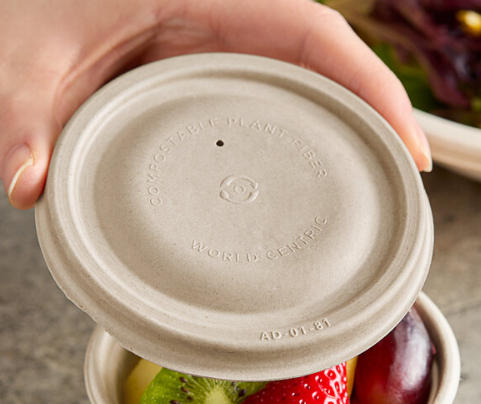
Japan has become a strategic market for eco‑friendly packaging, and global buyers are increasingly paying attention to Fiber Lid Manufacturers And Suppliers that can support sustainable foodservice and retail concepts. With strong regulations against single‑use plastics and a culture that values cleanliness and design, Japan is an attractive sourcing base for fiber lids made from molded pulp, bagasse, and other plant fibers.[1][2][3]
Japan's Fiber Lid Market Overview
Japan's broader molded fiber pulp packaging sector is led by major paper and packaging groups that are expanding into high‑end, food‑grade applications. These companies provide the infrastructure, raw material sourcing, and converting capabilities that many Fiber Lid Manufacturers And Suppliers rely on to serve international brands.[4][3]
Growing demand for bagasse tableware and compostable products in Japan is being driven by tighter plastic regulations and consumer awareness of environmental issues. The bagasse tableware market alone is projected to grow steadily through 2035, indicating strong potential for fiber lids as compatible components in complete sustainable packaging systems.[1]
Why Source Fiber Lids from Japan?
Japanese Fiber Lid Manufacturers And Suppliers stand out for their focus on quality, precision, and hygiene standards that match the expectations of global foodservice and retail chains. Many producers are connected to large paper groups or design‑driven tableware brands, giving importers both technical stability and innovative product aesthetics.[3][5][4][1]
For overseas brands and wholesalers, sourcing fiber lids from Japan offers:
- Stable pulp and paper supply from integrated packaging groups.[4][3]
- Strong design capabilities for premium presentation, especially in convenience retail and catering.[2][5]
- Compliance with strict food contact, safety, and sustainability expectations.[2][1]
Key Japanese Fiber Lid Manufacturers And Suppliers
Below are representative companies in Japan's molded fiber and eco‑tableware ecosystem that are relevant for buyers searching for Fiber Lid Manufacturers And Suppliers. All are real companies with active involvement in fiber‑based or biodegradable packaging.[6][5][3][1]
Oji Holdings / Oji Group
Oji Holdings is a global packaging provider investing heavily in high‑end molded pulp packaging and other fiber‑based solutions, positioning itself as an important upstream partner for Fiber Lid Manufacturers And Suppliers in Japan. As Oji develops molded pulp products and corrugated and paper packaging, its technology and capacity support custom fiber lids for food, cosmetics, and consumer goods.[3][4]
For overseas buyers, the advantage of working with Oji is access to a broad packaging portfolio and R&D resources, which can be combined with OEM partners for bespoke fiber lids. Their network of production sites and sales channels also helps ensure stable long‑term cooperation for large‑volume programs.[4][3]
Daio Paper Corporation
Daio Paper Corporation is listed among leading molded fiber pulp packaging producers in Japan, leveraging its strong paper business to supply eco‑friendly packaging solutions. While Daio is known for tissue and paper products, its packaging division is increasingly relevant for Fiber Lid Manufacturers And Suppliers seeking high‑quality base materials and conversion support.[3]
Buyers who need food‑grade fiber lids that match strict hygiene and consistency standards can consider Daio‑linked supply chains as a way to secure reliable pulp, baseboard, or molded pulp intermediates. This is especially valuable for global brands that want to integrate Japanese quality standards into their own OEM fiber lid lines.[3]
Hokuetsu Corporation
Hokuetsu Corporation also appears among key molded fiber pulp packaging players in Japan, with a long history in pulp and paper manufacturing. Through its packaging operations, Hokuetsu contributes fiber‑based solutions that can be adapted into lids, trays, and other food packaging components.[3]
For Fiber Lid Manufacturers And Suppliers, cooperating with a group like Hokuetsu can help ensure consistent fiber quality, basis weight control, and surface treatment needed for lids used with hot beverages, ready‑to‑eat meals, or delivery containers. Integration with large paper mills also supports steady supply for high‑volume OEM business.[3]
WASARA (Design‑Driven Fiber Tableware)
WASARA is a Japanese brand famous for elegant, compostable paper tableware that highlights local hospitality culture. The company offers refined plates, bowls, and cups designed for catering and events, many of which rely on molded fiber structures that align well with the performance requirements of fiber lids.[5]
For international distributors and brand owners, WASARA demonstrates how Fiber Lid Manufacturers And Suppliers in Japan can deliver not only functional packaging but also premium design and user experience. Working with WASARA or similar design‑oriented producers is ideal for brands targeting high‑end hotels, restaurants, and lifestyle retailers.[5]
Eco‑Oriented Packaging Companies in Japan
Japan's biodegradable packaging ecosystem includes companies such as KAYU PACKAGE, Tokan Kogyo, and Green Package, which focus on paper, wooden, and eco‑friendly food packaging solutions. These firms may not all specialize exclusively in fiber lids, but they provide materials, designs, or related packaging that Fiber Lid Manufacturers And Suppliers can integrate.[6]
- KAYU PACKAGE specializes in eco‑friendly food packaging, especially disposable wooden containers designed for environmental performance.[6]
- Tokan Kogyo operates in paper manufacturing and packaging services, offering high‑quality and potentially biodegradable packaging formats.[6]
- Green Package focuses on paper and forest‑based products, contributing to Japan's broader sustainable packaging supply base.[6]
For importers, cooperation with such companies often means access to complementary products—fiber bowls, trays, or sleeves—that match the look and sustainability level of fiber lids.[6]
Bagasse Tableware Brands Active in Japan
Market analysis for bagasse tableware in Japan highlights brands such as Wasara, Plantic Technologies, Suzumo, Green Home, EcoProducts, and Kawasho Corporation as key suppliers or influencers. These companies help educate the market on compostable plates, trays, and related packaging, and they build distribution channels that Fiber Lid Manufacturers And Suppliers can tap into.[1]
For example, Green Home and EcoProducts emphasize biodegradable disposables, while Kawasho Corporation is active as a trading and distribution company connecting global buyers with Japanese and regional manufacturers. This network is valuable if an overseas importer wants to combine Japanese‑made fiber lids with compatible bagasse or molded fiber base containers in one program.[1]
Technology Trends in Japanese Fiber Lids
Shift Toward Dry Molded Fiber
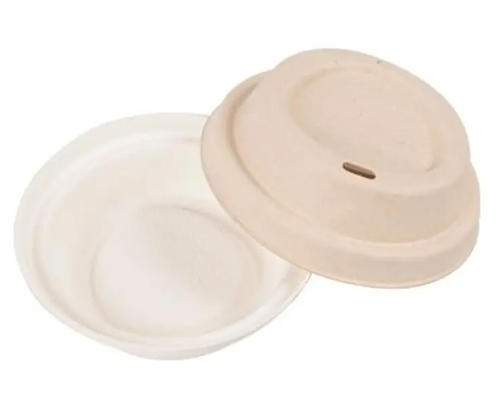
Dry molded fiber technology, as promoted globally by PulPac, is now being implemented in Asia to produce coffee lids and other food‑service items with reduced water and energy use. Nippon Molding Co. Ltd., for example, is highlighted as a Japanese molded fiber producer adopting Dry Molded Fiber systems to supply coffee lids and trays more efficiently.[7][8][9]
For Fiber Lid Manufacturers And Suppliers, dry molded fiber offers:
- Faster production speeds and lower unit costs compared with traditional wet molding.[8][7]
- Reduced water consumption and energy usage, supporting sustainability goals and certifications.[9][7]
- Improved dimensional accuracy, making lids fit more securely on paper cups or fiber bowls.[7]
Integration with Convenience and Retail Packaging
Japanese retailers and convenience chains are actively reducing plastic in lids and containers, which opens opportunities for fiber lids. Seven‑Eleven Japan, for instance, has shifted some salad packaging to top‑seal solutions, cutting plastic usage per container by about 30%. This demonstrates the broader mindset shift that favors fiber‑based lids and sealing options in ready‑to‑eat products.[2]
Fiber Lid Manufacturers And Suppliers serving the Japanese market often design lids that work with modified‑atmosphere packs, top seals, and ready‑meal trays used in convenience stores. Exporters who supply these lids can learn from Japanese packaging formats and adapt them for overseas supermarket and convenience channels.[2][3]
How Overseas Buyers Can Work with Japanese Fiber Lid Manufacturers And Suppliers
Typical Cooperation Models
When foreign brands, wholesalers, or manufacturers source from Japanese Fiber Lid Manufacturers And Suppliers, cooperation usually follows these models:
- OEM / private label production of fiber lids matched to existing cups, bowls, or containers supplied by the buyer.[1][3]
- Joint development projects where a Japanese packaging group provides molded fiber technology, while the overseas partner defines branding and market requirements.[4][3]
- Hybrid supply arrangements where lids are produced in Japan and combined with containers from other Asian countries, coordinated by Japanese trading houses.[1][6]
Japanese partners tend to focus strongly on specification details, CAD drawings, and performance testing, which helps ensure consistent quality for long‑term OEM contracts.[4][3]
Key Points to Check Before Cooperation
To build a stable partnership with Japanese Fiber Lid Manufacturers And Suppliers, overseas buyers should pay attention to:
- Fiber source and certifications: Confirm whether the lids use virgin pulp, recycled fibers, or bagasse, and request relevant food‑contact and sustainability documents.[1][3]
- Heat and liquid resistance: Verify that lids can handle hot coffee, soup, or microwaving, depending on the target segment.[5][1]
- Fit with existing containers: Match lid design with your cups or bowls to avoid leakage or deformation during transport.[2][3]
- Minimum order quantities and lead times: Large paper groups may require higher MOQs but can offer more stable supply.[4][3]
Opportunities for Foreign OEM Fiber Lid Producers
As a disposable tableware factory outside Japan, cooperating with Japanese Fiber Lid Manufacturers And Suppliers can strengthen both technology and market positioning. By learning from Japanese design, process control, and sustainability practices, foreign OEMs can upgrade their own fiber lid ranges or offer co‑branded solutions for demanding customers.[5][4][3][1]
Potential synergies include:
- Using Japanese‑developed fiber lid designs as benchmarks for global hotel, airline, and retail projects.[5]
- Combining cost‑competitive production in your own facility with Japanese‑inspired quality control and aesthetics.[3][1]
- Building joint marketing content that highlights “Japan‑standard” quality for fiber lids in international markets.[5][1]
Conclusion
Japan's ecosystem of Fiber Lid Manufacturers And Suppliers is anchored by large pulp and paper groups, design‑oriented tableware brands, and a growing network of eco‑packaging specialists. With strong sustainability regulations and advanced packaging technology, the country offers excellent reference partners and sourcing options for global buyers looking for high‑quality fiber lids.[2][6][4][5][1][3]
Whether cooperating directly with groups such as Oji, Daio, or Hokuetsu, or working through design brands like WASARA and eco‑packaging companies highlighted in Japanese market analyses, overseas buyers can find reliable Fiber Lid Manufacturers And Suppliers in Japan to support long‑term OEM projects. By integrating Japanese know‑how with their own production, foreign disposable tableware factories can quickly build competitive, sustainable product lines for global markets.[6][4][5][1][3]
FAQ
1. Are there many Fiber Lid Manufacturers And Suppliers in Japan?
Japan has a growing network of Fiber Lid Manufacturers And Suppliers supported by major molded fiber pulp packaging producers such as Oji Holdings, Daio Paper Corporation, and Hokuetsu Corporation. In addition, design‑driven brands and eco‑packaging specialists like WASARA and various bagasse tableware providers contribute to a diverse sourcing base.[4][5][1][3]
2. What materials do Japanese fiber lid producers typically use?
Japanese Fiber Lid Manufacturers And Suppliers often use wood‑based pulp from established paper mills, as well as bagasse and other plant fibers for compostable tableware. These materials are chosen to balance rigidity, heat resistance, and sustainability compliance.[1][3]
3. Can overseas brands order OEM fiber lids from Japanese companies?
Yes, many Japanese Fiber Lid Manufacturers And Suppliers cooperate on OEM and private label projects, especially when the buyer provides clear specifications and volume forecasts. Trading companies and distributors such as Kawasho Corporation and other market players can also help coordinate international orders.[4][3][1]
4. How do Japanese fiber lids compare in cost to other Asian suppliers?
Fiber lids sourced from Japan may have a higher unit price than those from some other Asian countries, reflecting local labor, technology, and quality standards. However, buyers often gain advantages in consistency, design, and regulatory compliance, which can reduce risks and quality‑related costs in premium markets.[5][3][1][4]
5. What trends will shape Japan's fiber lid market in the next few years?
Future growth will be driven by stricter plastic reduction policies, expanding demand for bagasse tableware, and wider adoption of technologies like dry molded fiber for coffee lids and foodservice items. As retailers and food chains push for more sustainable solutions, Fiber Lid Manufacturers And Suppliers in Japan are expected to increase capacity and offer more specialized designs.[7][2][3][1]
Citations:
[1](https://www.futuremarketinsights.com/reports/demand-and-trend-analysis-of-bagasse-tableware-product-in-japan)
[2](https://www.7andi.com/en/sustainability/theme/theme3/invention.html)
[3](https://www.futuremarketinsights.com/reports/molded-fiber-pulp-packaging-industry-analysis-in-japan)
[4](https://www.ojiholdings.co.jp/en/uploads/news/docs/ir/news/2024/EN06mp25.pdf)
[5](https://wasara.jp/e/)
[6](https://ensun.io/search/biodegradable-packaging/japan)
[7](https://www.pulpac.com/news/nippon-molding-first-dry-molded-fiber-manufacturer-in-japan/)
[8](https://www.packaginginsights.com/news/dry-molded-fiber-lids-asia.html)
[9](https://www.pulpac.com/news/hz-green-pulp-enters-full-scale-production/)
[10](https://pandopak.com/product/accessories/cup-lids/paper-lids/pulp-molding-lid/)
[11](https://www.kiefel.com/en/solutions/by-packaging-material/fiber)
[12](https://www.sumkoka.com/Japanese-Style-Eco-friendly-Sugarcane-Bagasse-Dishes-pd46433619.html)
[13](https://bonitopak.com/products/molded-fiber-for-food-packaging/)
[14](https://renouvo.net/eco-friendly-products/)
[15](https://luzhoupack.com)
[16](https://www.yutoeco.com/news_nc1_3)
[17](https://www.bestpluspulp.com/new-pulp-molding/)
[18](https://www.ec21.com/companies/bagasse-tableware.html)
[19](https://www.goodmaxcn.com/product/biodegradable-packaging-containers/)
[20](https://www.bioleaderpack.com/comprehensive-guide-to-sugarcane-bagasse-tableware-2025/)


